

Welcome, fellow travelers and history enthusiasts! If you’re planning a trip to Hanoi, Vietnam’s vibrant capital, one destination that should top your list is the Temple of Literature (Van Mieu – Quoc Tu Giam). As Vietnam’s first university and a sacred site dedicated to Confucius, this historic complex offers a profound glimpse into the country’s cultural and educational heritage. Nestled amidst Hanoi’s bustling streets, the Temple of Literature is a serene oasis of ancient architecture, lush gardens, and timeless stories. In this comprehensive guide, I’ll walk you through everything you need to know to plan your visit—from its rich history and key attractions to practical tips, nearby sights, and insider advice. Let’s embark on a journey through Vietnam’s intellectual and spiritual past!
Why Visit the Temple of Literature in Hanoi?
The Temple of Literature isn’t just a tourist spot; it’s a symbol of Vietnam’s reverence for learning and tradition. Established in 1070 under Emperor Ly Thanh Tong, it was dedicated to Confucius and later became the country’s first center of higher education, Quoc Tu Giam, in 1076. For nearly a millennium, it served as a training ground for scholars and mandarins who shaped Vietnam’s governance during feudal times. Today, it stands as a UNESCO-recognized site (part of Hanoi’s cultural heritage) and a peaceful retreat from the city’s chaotic energy. Whether you’re a history buff, a culture seeker, or simply looking for a picturesque spot for photos, the Temple of Literature offers something for everyone. Let’s dive into its story and what makes it unmissable!
A Brief History of the Temple of Literature
The Temple of Literature was founded during the Ly Dynasty to honor Confucius, whose teachings on ethics, education, and governance deeply influenced Vietnamese society. Modeled after the Temple of Confucius in Qufu, China, it reflects the strong Confucian ideals that shaped Vietnam’s feudal system. In 1076, Emperor Ly Nhan Tong established Quoc Tu Giam, an elite school within the temple grounds, to educate the nation’s brightest minds—often sons of nobility—for civil service exams based on Confucian texts.
Over centuries, the temple survived wars, colonial rule, and modernization, though it faced damage during conflicts like the French colonial period. Restoration efforts have preserved its original layout, and today it remains a testament to Vietnam’s commitment to knowledge. It’s also a site of cultural significance, often visited by students praying for academic success before exams. Understanding this history enriches your visit, as every gate, courtyard, and stone tablet tells a story of Vietnam’s past.
Getting to the Temple of Literature
Located in Hanoi’s Dong Da District, the Temple of Literature is centrally positioned and easy to reach from most parts of the city.
- Address: 58 Quoc Tu Giam Street, Dong Da District, Hanoi, Vietnam.
- By Public Transport: Take Hanoi’s public bus system—routes like 02, 23, or 38 stop near the temple (look for the “Van Mieu” stop). Tickets cost around 7,000-10,000 VND ($0.30-0.40 USD) per ride. Alternatively, use ride-hailing apps like Grab for a motorbike or car (around 50,000-100,000 VND/$2-4 USD from Old Quarter).
- By Taxi or Grab: From popular areas like the Old Quarter or Hoan Kiem Lake, a taxi or Grab ride takes 10-15 minutes and costs 50,000-80,000 VND ($2-3.50 USD).
- By Walking or Cycling: If you’re staying near the Old Quarter, it’s a pleasant 20-30 minute walk or a short cyclo (traditional pedicab) ride for about 50,000 VND ($2 USD).
- By Tour: Many guided tours of Hanoi include the Temple of Literature as a stop, often combined with sites like the Ho Chi Minh Mausoleum or One Pillar Pagoda. Prices start at $20-30 USD for half-day tours.
Tip: Hanoi’s traffic can be chaotic. If walking or cycling, stay alert to motorbikes. Download offline maps like Maps.me or use Google Maps for navigation.
Visiting Information: Hours, Tickets, and Rules
- Opening Hours: The Temple of Literature is open daily from 8:00 AM to 5:00 PM (last entry at 4:30 PM). During special events or holidays like Tet (Vietnamese Lunar New Year), hours may vary, so check ahead.
- Entrance Fee: Tickets cost 30,000 VND ($1.20 USD) for adults, 15,000 VND ($0.60 USD) for students with ID, and are free for children under 15. An additional 50,000 VND ($2 USD) applies if you want a guided tour or audio guide (available in English, Vietnamese, and other languages).
- Dress Code: As a sacred site, modest clothing is required. Avoid shorts, tank tops, or revealing outfits. Bring a light scarf or shawl if needed to cover shoulders or legs.
- Rules: Photography is allowed, but drones are prohibited. Do not touch or climb on historical artifacts like the stone stelae. Keep noise levels low to respect the tranquil atmosphere and other visitors.
- Best Time to Visit: Early morning (8:00-10:00 AM) or late afternoon (3:00-5:00 PM) to avoid crowds and midday heat. Spring (February-April) and autumn (September-November) offer pleasant weather. During Tet, expect festive decorations but larger crowds.
Tip: Buy tickets at the main entrance on Quoc Tu Giam Street. Avoid unofficial vendors outside who may overcharge.
Exploring the Temple of Literature: Key Areas and Highlights
The Temple of Literature spans over 54,000 square meters and is divided into five courtyards, each with distinct features and symbolism. The layout follows traditional Confucian architecture, progressing from public to sacred spaces. Here’s what to see in each area, with approximate times for a leisurely visit.
1. First Courtyard: Van Mieu Gate and Entrance Path (10-15 minutes)
Enter through the imposing Van Mieu Gate, a triple-arched structure symbolizing the path to knowledge. The central arch, reserved historically for royalty, is often closed, so visitors use the side arches. Walk along the brick pathway lined with ancient banyan trees and notice the serene pond on either side, reflecting traditional Vietnamese balance and harmony. This area sets the tone for the spiritual journey ahead.
Highlight: Take a photo at the gate with the temple’s name in Chinese characters—a classic Hanoi snapshot.
2. Second Courtyard: Khue Van Pavilion (15-20 minutes)
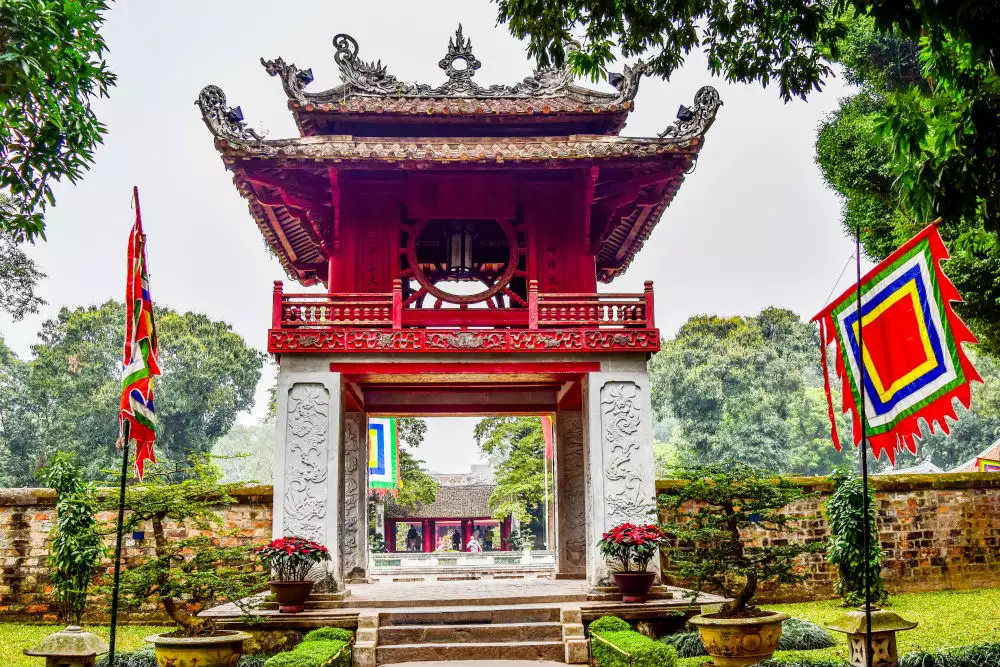
Pass through the Dai Trung Gate to reach the second courtyard, home to the iconic Khue Van Pavilion. Built in 1805, this elegant wooden structure on stone pillars over a square pond represents the constellation of literature and is a symbol of Hanoi itself (you’ll see it on the 100,000 VND banknote). The pavilion’s red lacquered wood and curved roof are stunning against the surrounding greenery.
Highlight: Admire the pavilion from different angles and read the nearby plaques (in Vietnamese and English) explaining its cultural significance.
3. Third Courtyard: Thien Quang Well and Doctors’ Stelae (20-30 minutes)
The third courtyard, accessed via the Dai Thanh Gate, centers around the Thien Quang Well, a reflective pond symbolizing purity. Flanking the well are 82 stone stelae mounted on tortoise backs, inscribed with the names and achievements of doctoral graduates from 1442 to 1779. These “Doctors’ Stelae” are a UNESCO Memory of the World artifact, representing Vietnam’s dedication to education. Touching the tortoise heads is believed to bring good luck in studies, though signs now discourage this to preserve the stones.
Highlight: Spend time reading the translated inscriptions (some have English summaries) to appreciate the scholars’ stories. The tortoises symbolize longevity and wisdom.
4. Fourth Courtyard: House of Ceremonies (15-20 minutes)
Enter the fourth courtyard through a smaller gate to find the House of Ceremonies (Dai Bai Duong), a grand hall used for rituals honoring Confucius and his disciples. The interior features altars, incense burners, and traditional Vietnamese architectural elements like wooden beams and tiled roofs. This area often hosts cultural events or reenactments of ancient ceremonies, especially during festivals.
Highlight: Observe the intricate dragon carvings and red-and-gold decor inside the hall, reflecting Confucian reverence.
5. Fifth Courtyard: Quoc Tu Giam and Imperial Academy (20-30 minutes)
The final courtyard, accessed via a side path, was the site of Quoc Tu Giam, Vietnam’s first university. Though the original structures were destroyed during French colonial bombings, reconstructed buildings now house exhibits on Vietnam’s educational history, including ancient texts, scholar uniforms, and exam artifacts. This quieter area offers benches to rest and reflect on the temple’s legacy.
Highlight: Check out the small museum displays (included in the ticket price) for insights into feudal education and Confucian exams.
Total Exploration Time: Allow 1.5-2.5 hours for a full visit, depending on your pace and interest in reading plaques or taking photos.
Cultural Significance and Events at the Temple of Literature
Beyond its historical role, the Temple of Literature remains a living cultural site. Students often visit to pray for success before exams, leaving offerings at altars or tying wishes on trees. The temple hosts events like:
- Tet Festival (January/February): Traditional calligraphy demonstrations, folk games, and decorations celebrate the Lunar New Year.
- Graduation Ceremonies: Modern students in traditional ao dai (Vietnamese dress) take photos here, especially in May-June.
- Calligraphy Festivals: Held sporadically, these showcase Vietnam’s art of writing Chinese characters, a nod to Confucian influence.
Tip: If visiting during an event, expect larger crowds but a vibrant atmosphere. Check Hanoi tourism websites or local news for event schedules.
Practical Tips for Visiting the Temple of Literature
- What to Bring: Carry water, sunscreen, and a hat—Hanoi can be hot and humid, especially midday. Bring small change (VND) for tickets or nearby vendors. A camera or smartphone is a must for photos.
- Language: Signage includes English translations, but they’re brief. Consider a guide or audio tour for deeper context. Basic Vietnamese phrases like “Xin chao” (hello) and “Cam on” (thank you) go a long way with locals.
- Accessibility: The temple is mostly flat with paved paths, but some areas have steps. Wheelchair access is limited due to narrow gates and uneven bricks—contact the site in advance for assistance.
- Restrooms and Facilities: Clean restrooms are available near the entrance (free). A small gift shop sells postcards, books, and souvenirs (10,000-50,000 VND/$0.40-2 USD).
- Scams to Avoid: Ignore touts outside offering overpriced guides or trinkets. Stick to official ticket counters and licensed guides if needed.
- Weather: Hanoi’s climate varies—rainy season (May-September) can be wet, so bring an umbrella. Dry season (October-April) is cooler and ideal for walking.
Nearby Attractions to Combine with Your Visit
The Temple of Literature’s central location makes it easy to pair with other Hanoi highlights for a full day of exploration. Here are some nearby spots within 1-2 km:
- Ho Chi Minh Mausoleum (1.5 km, 20-minute walk or 5-minute taxi): Pay respects to Vietnam’s revered leader. Free entry, open mornings (closed Mondays and Fridays), strict dress code and rules apply.
- One Pillar Pagoda (1.5 km): A unique wooden pagoda resembling a lotus flower, near the Mausoleum. Free entry, takes 15-30 minutes.
- Vietnam Fine Arts Museum (0.5 km, 10-minute walk): Showcases Vietnamese art from ancient to modern times. Entry 40,000 VND ($1.60 USD), 1-2 hours.
- Hanoi Old Quarter (2 km, 10-minute taxi or 30-minute walk): A bustling maze of streets with street food, shops, and colonial architecture. Perfect for lunch or souvenirs after your temple visit.
Suggested Itinerary (Half-Day):
- 8:00 AM: Arrive at Temple of Literature, explore for 2 hours.
- 10:30 AM: Walk or taxi to Ho Chi Minh Mausoleum and One Pillar Pagoda (1-1.5 hours).
- 12:30 PM: Head to Old Quarter for lunch (try pho or bun cha, 50,000-100,000 VND/$2-4 USD) and sightseeing.
- Total Cost: Approx. 80,000-150,000 VND ($3-6 USD) per person, excluding transport.
Dining Near the Temple of Literature
Hanoi is a food lover’s paradise, and the area around the temple offers affordable, authentic options.
- Local Eateries: Small restaurants on Quoc Tu Giam Street serve classics like pho (beef noodle soup, 50,000 VND/$2 USD) or bun cha (grilled pork with noodles, 60,000 VND/$2.50 USD).
- Street Food Stalls: Near the temple or en route to Old Quarter, grab banh cuon (steamed rice rolls, 30,000 VND/$1.20 USD) or cha gio (spring rolls, 20,000 VND/$0.80 USD).
- Cafes: For a break, try Think in a Box or Koi Cafe nearby for Vietnamese coffee (ca phe sua da, 30,000-50,000 VND/$1.20-2 USD).
Tip: Avoid touristy spots with inflated prices near the entrance. Walk a block away for cheaper, tastier options.
Souvenirs and Shopping at the Temple of Literature
The on-site gift shop offers cultural keepsakes like:
- Postcards and bookmarks with temple imagery (10,000-20,000 VND/$0.40-0.80 USD).
- Books on Vietnamese history or Confucianism (50,000-100,000 VND/$2-4 USD).
- Calligraphy prints or small replicas of the Khue Van Pavilion (30,000-70,000 VND/$1.20-3 USD).
For more variety, head to the Old Quarter for handicrafts, silk scarves, or lacquerware at better prices. Always bargain politely if shopping outside official stores.
Why the Temple of Literature is a Must-Visit in Hanoi
The Temple of Literature isn’t just a historical site; it’s a window into Vietnam’s soul. Its tranquil courtyards, ancient relics, and enduring legacy of learning offer a stark contrast to Hanoi’s frenetic pace. Whether you’re captivated by the Doctors’ Stelae, inspired by the Khue Van Pavilion, or simply seeking a quiet moment by Thien Quang Well, this sacred space leaves a lasting impression. It’s a place to reflect on the value of knowledge and the cultural threads that bind Vietnam’s past to its present.
Final Thoughts: Plan Your Visit to Hanoi’s Temple of Literature
A trip to the Temple of Literature is an essential part of any Hanoi itinerary, blending history, culture, and serenity into one unforgettable experience. With affordable entry, easy access, and nearby attractions, it’s perfect for a half-day exploration or as part of a broader city tour. Arrive early, dress respectfully, and take your time to absorb the stories etched into every stone and gate. Hanoi’s ancient heart awaits—don’t miss it!
Have you visited the Temple of Literature, or do you have questions about planning your trip to Hanoi? Drop a comment below—I’d love to share more tips or hear your experiences. Safe travels! 🌿🏯🇻🇳


